
World-renowned primatologist, anthropologist, and climate and animal rights advocate Jane Goodall passed away on Oct. 1, leaving behind a history of impactful research at the University of Minnesota. The university hosted a ceremony honoring Goodall on Oct. 23.
“[I]t really feels like we are members of [a] family. You almost forget that she also belongs to the world and has affected so many other people’s lives besides ours,” University of Minnesota professor of ecology, evolution, and behavior Dr. Michael Wilson said. He worked for the Jane Goodall Institute—a company dedicated to the protection of primates and their homes—for three years, researching apes with Goodall’s team in Gombe, Nigeria.
During her 65-year-long observation and research collection on apes and their livelihoods, Goodall and her team learned key information still being collected: information regarding chimpanzee behavior which shrunk the gap between known primate and human tendencies.
Some of this research was housed on the University of Minnesota campus for six years, brought by professor Anne Pusey, a colleague of Goodall who had accompanied her time in Tanzania for over 50 years. Researchers working with data, such as Dr. Wilson, are currently digitizing her research to preserve it and putting together data that spans many chimpanzee lifetimes.
“My students who have worked on chimpanzee research at Gombe have all used the research,” Dr. Wilson said. He too continues to use it as it is relevant to the behavioral focus of his research.
University of Minnesota anthropologist and primatologist Dr. Carrie Miller continues to use some of Goodall’s skeletal materials left behind at the campus. Data from studying the skeletal materials was collected firsthand in the field, including handwritten behavioral notes in Swahili.
According to Dr. Miller, students earning their PhD are able to use readily available research such as Goodall’s to provide necessary information for their own projects. Dr. Wilson added that researchers are able to combine both old and new research to answer research questions.
After its departure, the research has since been transferred around under different supervisors, now residing at Arizona State University. While not actively on the University of Minnesota campus, it continues to have lasting effects such as its continued use in student research, sparking conversation among professors and students alike.
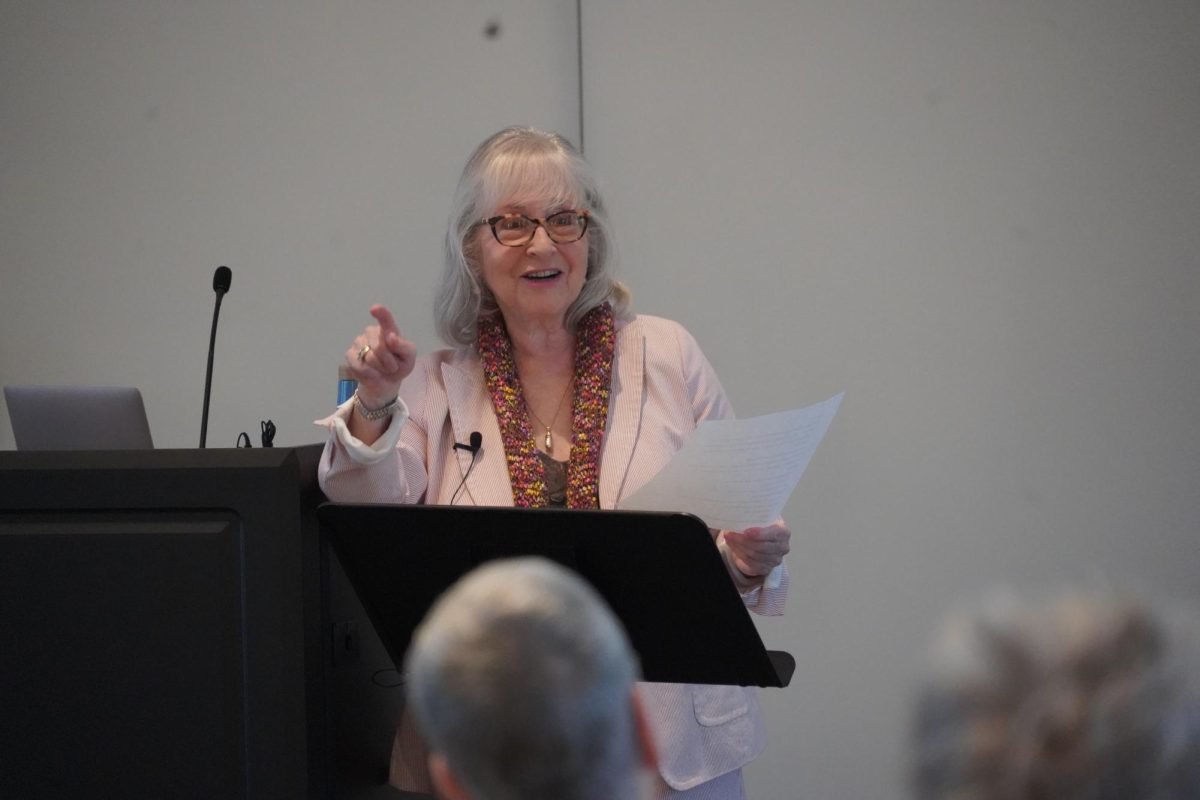
To honor Goodall’s impact, the Ecology, Evolution and Behavior Club at the University of Minnesota organized a schoolwide event celebrating her life’s work and her legacy left on the science community. It had to be moved to a larger venue due to an unexpected amount of RSVPs. Recently, professors on campus have noticed increased academic discussion regarding Goodall and her life’s work, and they too have begun to infuse their lectures with references to Goodall’s career.
When speaking on Goodall’s legacy, both Dr. Miller and Dr. Wilson referenced her activism for not only primates, but for the human species. “[O]ne of the really extraordinary things about Jane is her powerful sense of empathy,” Dr. Wilson said. Goodall prioritized habitat preservation with regard to populations surrounding primate habitats, with ecotourism being a climate-friendly solution that she often returned to.
Goodall was most known by the world for trying to expand conservation and primate-rights awareness. However, climate advocacy became a prominent topic of discussion as her career progressed. With Minnesota weather varying year by year, climate change is an increasingly relevant topic for the science and political communities with a focus on sustainable living. Goodall inspired action with the next generation, using her platform as a United Nations Messenger of Peace and promoting small lifestyle changes felt globally.
“We would not be where we are now without that first step that Jane took,” Dr. Miller said.
This piece was originally published in Zephyrus’ print edition on Nov. 6, 2025