Each year for a week in the time between April and May, the Edina community comes together to remember the Holocaust with speakers and presentations. The Holocaust Days of Remembrance event has been an ongoing tradition since Edina mayor James Hovland established it in 2012.
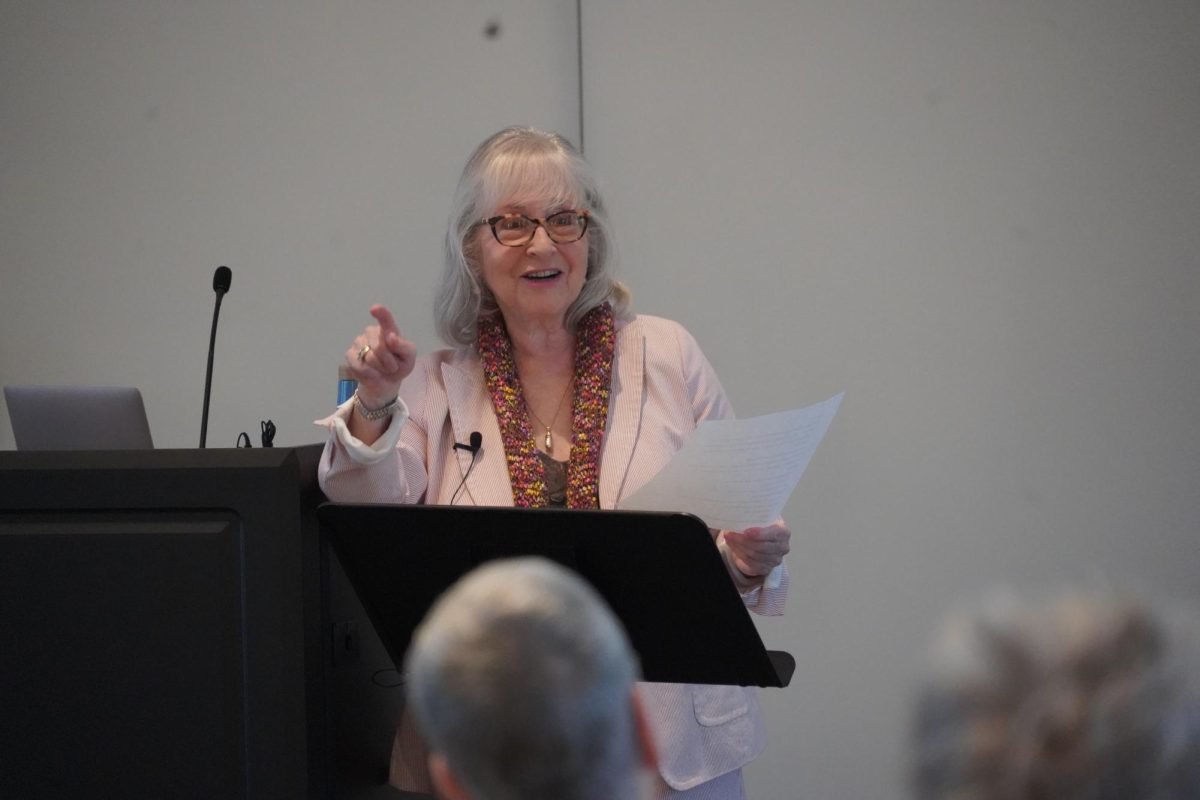
This year, Edina hosted speaker Janet Horvath for the Days of Remembrance event. Horvath is a cellist and author of the book “The Cello Still Sings,” which covers the story of her parents’ lives after surviving the Holocaust. Other speakers of the evening included Hovland and City Council member Carolyn Jackson.
During her presentation, Horvath used videos of her playing the cello paired with landscape paintings to set the tone of the evening and break up her presentation, in which she recalled her father’s journey to freedom and her mother’s narrow escape from persecution.
However, these were stories Horvath had to uncover over time as her parents would commonly redirect conversations when a topic deemed sensitive arose.
“Maybe I was afraid to ask the questions, maybe I was afraid to hear the answers,” Horvath said.
After digging, Horvath found a secret: her dad had played at various displaced persons camps after the war for refugees along with 17 other orchestra members and survivors of the Holocaust. They had traveled all over Bavaria and had even played with Horvath’s cellist idol, Leonard Bernstein.
Horvath used this information and a testimony her father wrote to uncover the full story that her parents had buried all her life. Using this, she decided to write a book to encapsulate her family’s story.
“There’s a lot of Holocaust books up there, and, of course, there are six million stories, but there wasn’t as much about how they put their lives back together again after such trauma… I thought that was a really worthy subject,” Horvath said.
During her speech, she read from her book “The Cello Still Sings,” recounting memories she and her parents had made and how they had a lifelong impact not only on her profession, but on her decision to write her book.
Throughout the night, Horvath and other speakers emphasized the importance of remembrance and continued discussions about the Holocaust.
“Remembrance is not only about the past, it is about what we chose to carry forward,” Hovland said during his closing remarks.