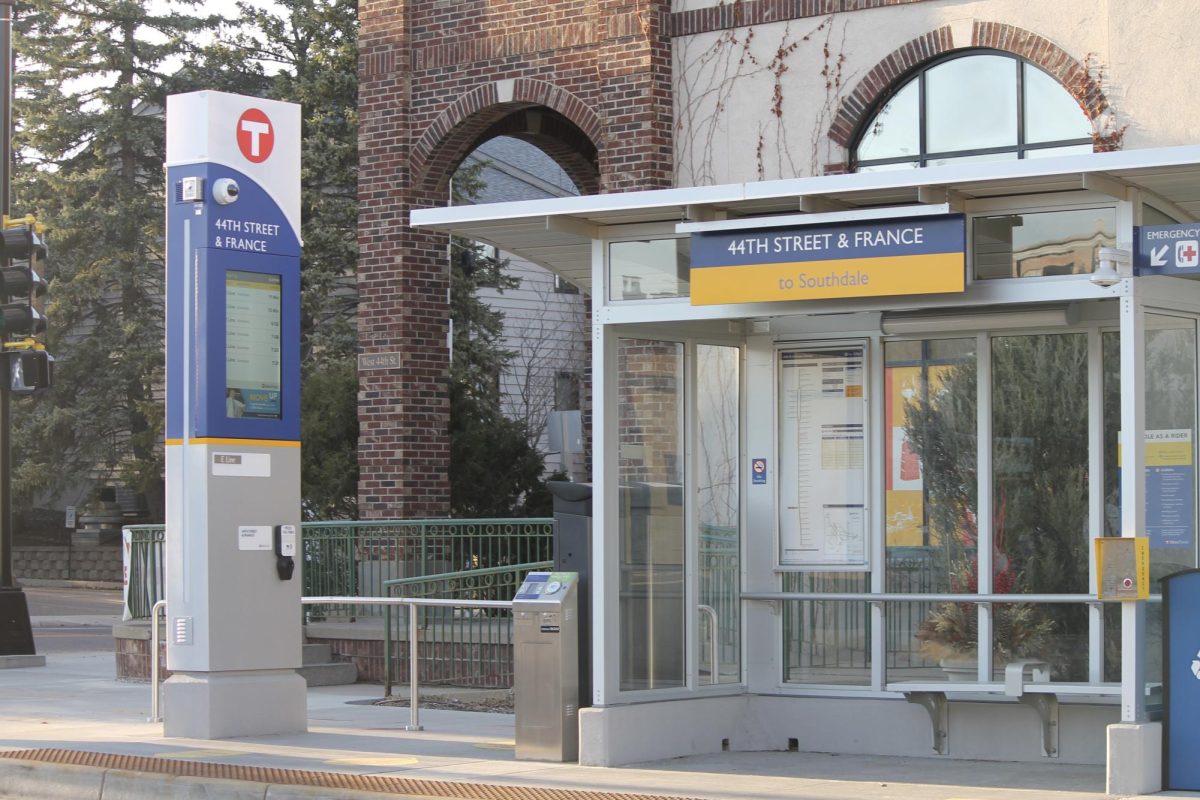
Metro Transit’s newest bus line opened four months ago, as of Monday. The E Line, a bus rapid transit route with eight stops in Edina, has 20% higher ridership than projected, according to an outreach coordinator for the company.
Planning began in the late 2010s, with the Metropolitan Council approving a route along France Avenue to serve the 50th & France business area and give riders access to Fairview Southdale Hospital.
The E Line was also designed to replace Route 6, the former bus line, to be more efficient. As a bus rapid transit line, E Line buses run up to 25% faster than local buses and have amenities such as emergency telephones, real-time signs, and security cameras. Standard rides cost $2, with reduced fares and all-day passes available.
Junior Augie Lassig serves as a student commissioner on the Edina Transportation Commission. While the commission is limited in its abilities because the Metropolitan Council plans and approves initiatives, he and other commissioners discussed the route prior to its implementation.
Lassig said he’s taken the bus to Southdale Mall and appreciates its 10-minute arrivals, larger size, and environmental benefits.
“It’s generally good for economic development,” he said. “Public transit improves access to small businesses. It lets people who might not have access to cars reach places easily.”
Edina mayor Jim Hovland, residents, and an official from Metro Transit rode the E Line a couple of weeks ago for March’s Walk With the Mayor. Erik Thompson, an outreach coordinator for Metro Transit, said this is one instance of the agency’s public engagement; in addition to attending events where people may ride, leaders from Metro Transit also participate in neighborhood association meetings and send postcards.
Thompson said reception for the E Line is largely positive, and even someone who “pushed back on the route during its planning phase” approved. Still, he said Metro Transit is always improving and appreciates any feedback.
Both Lassig and Thompson emphasized that public transit is a service provided for taxpayers, by taxpayers.
“Everybody who rides has ownership of it,” Thompson said. “That’s why I think it’s really important that they engage and talk about what their needs are.”
This piece was originally published in Zephyrus’ print edition on April 9, 2026