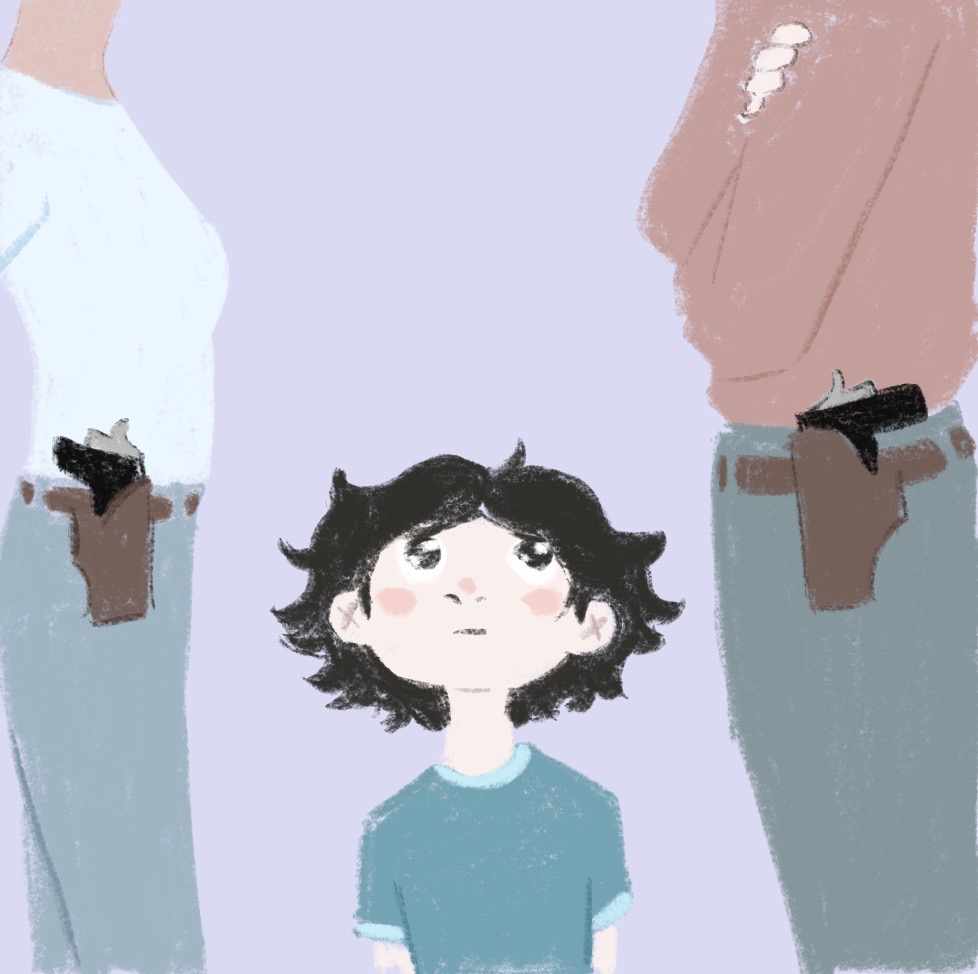

None of my classmates knew what my left eye looked like in elementary school. At the time, I kept it covered with a swoop of black hair, emulating my style icon, Violet from “The Incredibles.” Entering middle school, however, a passing comment from a friend that my hair was “cringe” crushed my confidence, and everything went up into a ponytail. Why has “cringe” devolved from a term for secondhand embarrassment to a tool to degrade authentic interests (like the completely valid desire to look like Violet)?
Nowadays, we throw around the term “cringe” like nobody’s business. What started on the internet as a description of awkward online displays now permeates the tangible world. Over the past few decades, use of the word in published work has increased by eight times, according to the LA Times.
We all have an inherent fear of judgement, which the constant presence of social media only amplifies. Vulnerability is intimidating. Exposing the realest versions of ourselves, with no protective shell of sarcasm or irony, leaves us sensitive to criticism. We’re scared of rejection, especially as teenagers still forming identities, and that fear has been compounded by the external pressure to develop a presence on social media.
Our generation has grown up with cameras in our faces. Everything is a performance, and personal identity is emphasized. In this perpetual spotlight, there’s a special desire to act in a way that doesn’t incur judgement, since the potential to be accused of being “cringe” increases exponentially when eyes are always watching. As a result, we lean into defensive nonchalance and point fingers at those who don’t, perpetuating the unfriendly environment we desire escape from.
Adults tell us to be ourselves; hypocritical influencers encourage us to brush off criticism and dance like nobody is watching. Although this is good advice, it’s not always realistic. It’s okay to fear judgement, but it’s not okay to send negativity toward people displaying authenticity as a self-defense mechanism.
Don’t chain yourself to the fickleness of other people’s opinions. At the end of the day, it’s infinitely more uncool to hinge your identity on outside criticism than to wholeheartedly embrace what you love.
As for me, I’ll wear my hair however I like.
This piece was originally published in Zephyrus’ print edition on Nov. 6, 2025