
Guillermo del Toro’s reimagining of “Frankenstein” was shockingly… alright. When the movie was announced, it faced expectations it was going to be another trashy redoing of a classic and turn out to be boring and unoriginal, but it managed to overcome that presumption. The 2025 reimagining of Mary Shelley’s work was a great retelling that paid homage to the original while tying in things that were not in the original book, and although there can be some criticism about the addition of some tie-ins to the rest of the story, the movie truly shined in its costume design and composition.
During the film, del Toro took some interesting creative liberties while exploring Victor Frankenstein’s childhood; specifically, the movie branched off of the book’s original plot when his father, who was textually described as kind and caring, inflicted physical violence on him in the movie. This decision was strange and retconned the reasons why Dr. Frankenstein is the way he is, as well as his later motivations in his creation of his creature.
It felt like the movie was focusing on the wrong things, with some stretches focusing on arbitrary pieces of plot that seemed unimportant. One example would be when Dr. Frankenstein showed his work to the french academy, which would finance his work. These scenes showed really no substance besides that the public thought that Dr. Frankenstein was overstepping and trying to play God. Instead of this scene, something they should’ve added was Justine’s trial. Justine was a companion of Dr. Frankenstein who was falsely accused of murdering his younger brother when in reality, the perpetrator was the monster he created. This fueled Dr. Frankenstein’s hatred for his monster because it led to the death of one of his close friends. Without this, the movie lost much of its character motivations.
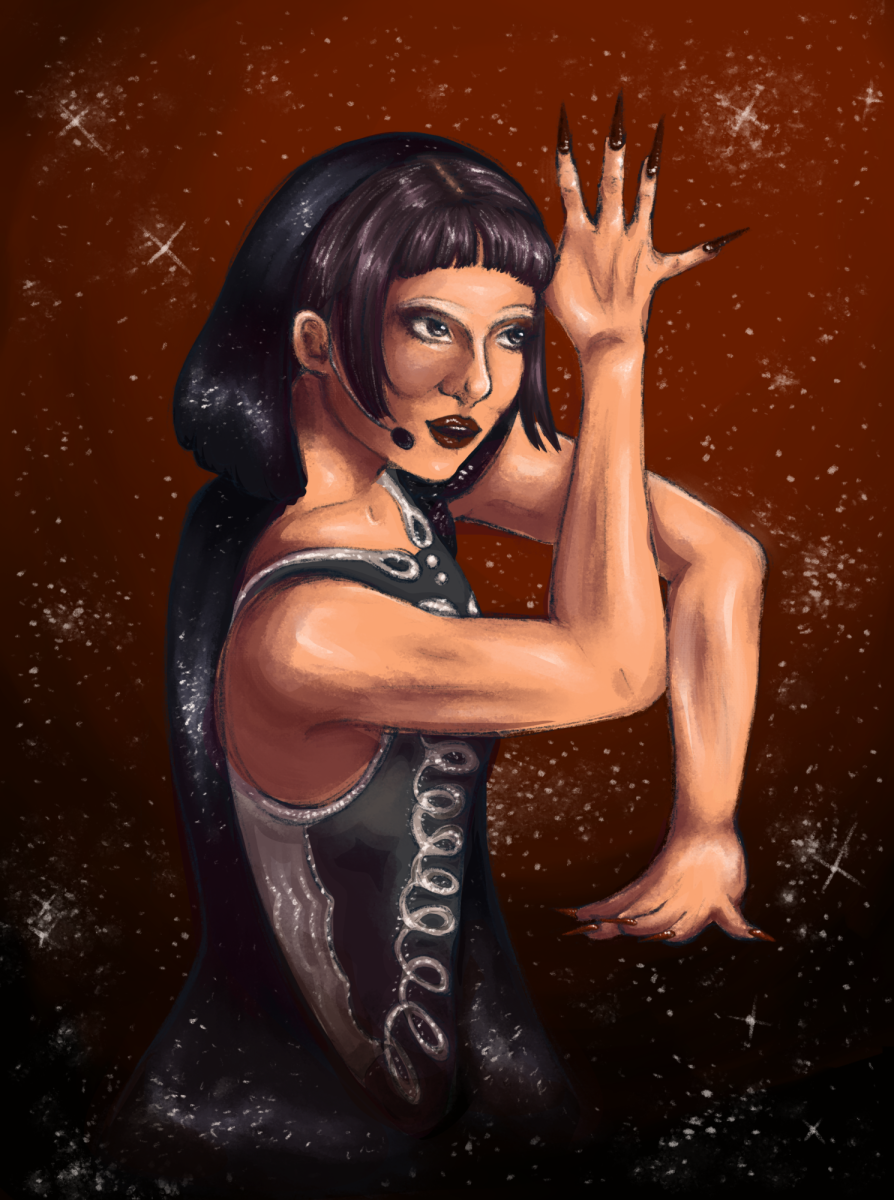
The costume design accentuated the characters’ roles, with Dr. Frankenstein’s increasing distress reflected by his tattered clothes compared to his childhood’s regal attire and his clothes becoming loose and disorganized during his creation of the monster. Another example is Elizabeth Harlander’s costumes being red and green to symbolize her conflicting love for Dr. Frankenstein and his younger brother William. The storytelling through the costume design was well-tuned with the themes of each character and worked very well in the world of “Frankenstein.”
Another thing beautifully done about this movie was how it was composed. The filmmakers used light and dark values to really highlight key figures, such as an old man mostly being shown in the light portraying his good nature and kindness for the creature, counterbalanced with opposing dark values for characters like Dr. Frankenstein, especially when in his fit of madness. Along with the light values, the shooting of the scenes, such as the creature and Elizabeth meeting for the first time, framed the monster and Elizabeth as parallels, showing how he was not born a monster, but it was society that made him into one through rejection and isolation.
Del Toro’s reinvention of the plot was not perfect as it had some unneeded bloat and left out a lot of scenes from the original that were essential for getting to know the monster and Dr.Frankenstein. Besides that, however, the movie was enjoyable. It shines in the scenery and craftmanship, which added so much to the characters. While the movie was a little underwhelming with its retelling of the story, it wasn’t the worst thing to come out in recent times. Though it may not win Best Picture this Sunday, its additional nominations—specifically for costume design, cinematography, and production—are certainly well deserved.