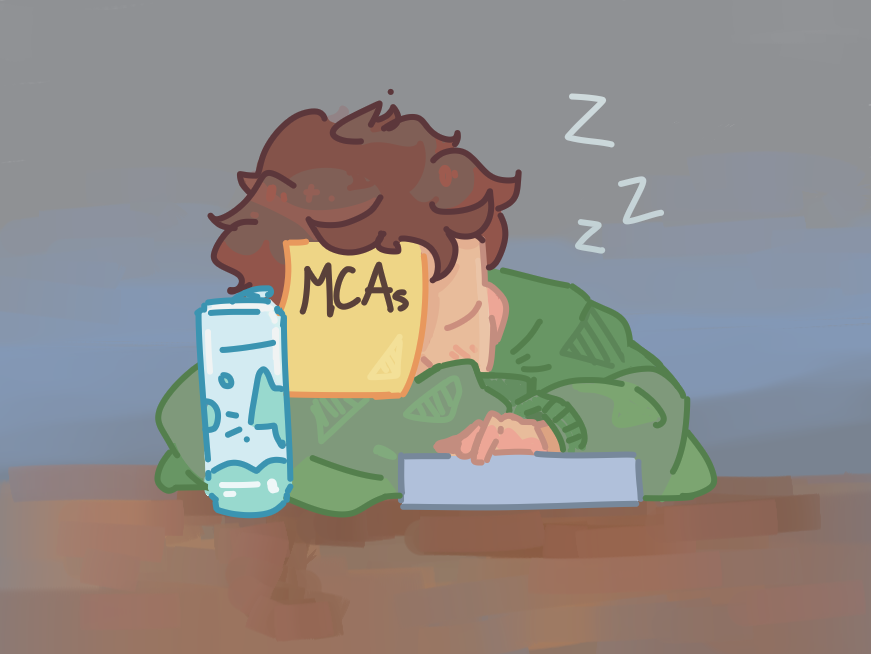
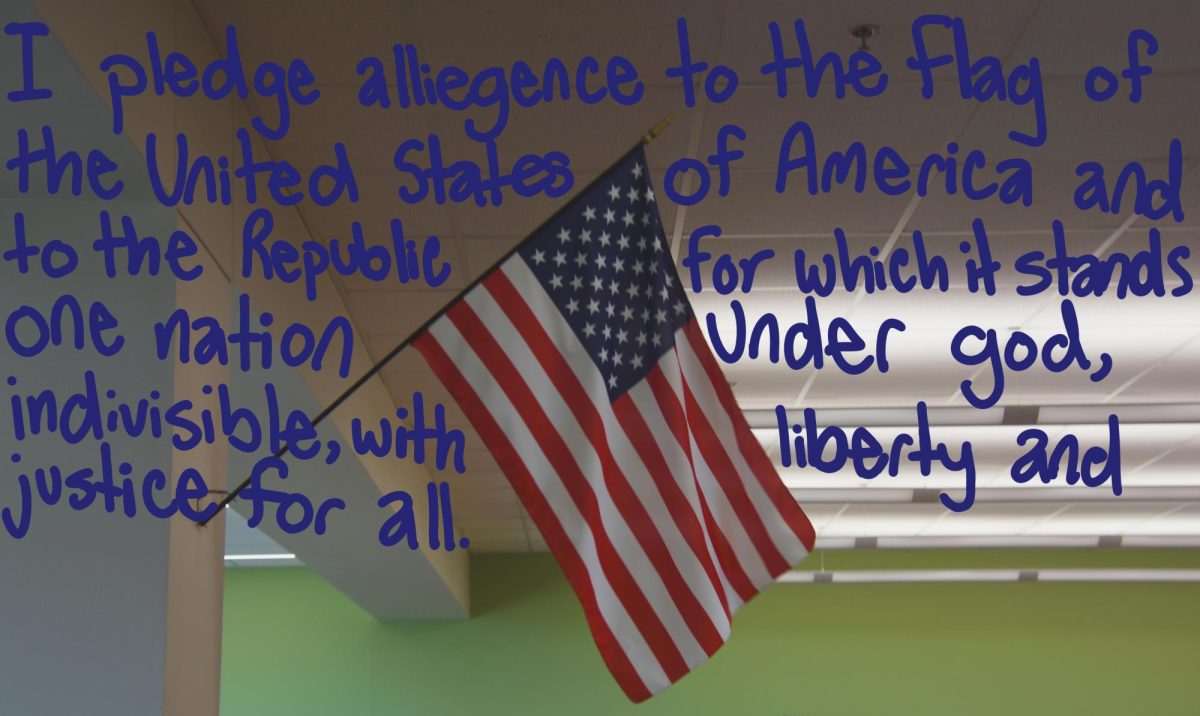
The Pledge of Allegiance blares on the loudspeakers in my first hour class. Its monotonous voice drones on, and I only see about half the class stand up. My first thought: it’s a Monday morning, and no one has the energy to stand up. However, there may be a more profound meaning behind this refusal. The Pledge of Allegiance has been a phenomenon across the country for decades. However, if students aren’t even united about whether to stand up for a “unifying” verse throughout the U.S., then the conclusion to draw should be clear: The Pledge of Allegiance can no longer represent our country because it’s not a centripetal force for the people.
To begin with, the U.S. is a multicultural state, with different groups of people who immigrated here along with their culture. These cultures bring diverse religions, which adds to the country’s beauty. However, this ideology gets struck down in the education system due to Christian nationalism, and the Pledge of Allegiance is a large part of the problem. The lyrics “under God” suggest that our nation is under one God. While this may be true for some, it’s not for others. Especially from an educational standpoint, students who don’t follow a monotheistic religion are not only the minority in America, but actively face exclusion from these words. This clearly is a misrepresentation of the American people.
Additionally, with almost a clean 50-50 split between Democrats and Republicans, it’s clear that the U.S. is, in fact, divisible. How are the American people supposed to be “indivisible” when 67% of Americans say that this country is “pretty seriously” on the wrong track? The government and politicians nowadays are so worried about getting their point across that they don’t focus on what truly matters: a unified nation tied together by peace.
Moreover, this is shown by the lyrics “with liberty and justice for all.” The U.S. justice system is constantly manipulated by the overuse of shadow dockets and bribery in the Supreme Court. Unfortunately, this isn’t only happening on the national level. In our state, Renee Nicole Good, a U.S. citizen, was denied constitutional treatment when she was shot by an ICE officer despite remaining within her rights. Furthermore, Jonathan Ross, the perpetrator of Good’s death, saw no charges, which demonstrates the lack of justice on a sub-state and national level. That is just one example of the system in which America doesn’t ensure liberty and justice for all.
Based on these points, it’s clear that Americans don’t have a sense of nationalism anymore. There is a divided response in the representation of America. Our country lacks centripetal forces that hold people together in a peaceful way. Americans should take pride in our unifying songs, but not when they misrepresent our nation. Although the pledge can be something we look up to, how are we supposed to stand right now if many people aren’t actively working to stop these issues in the world?
This piece was originally published in Zephyrus’ print edition on April 9, 2026