

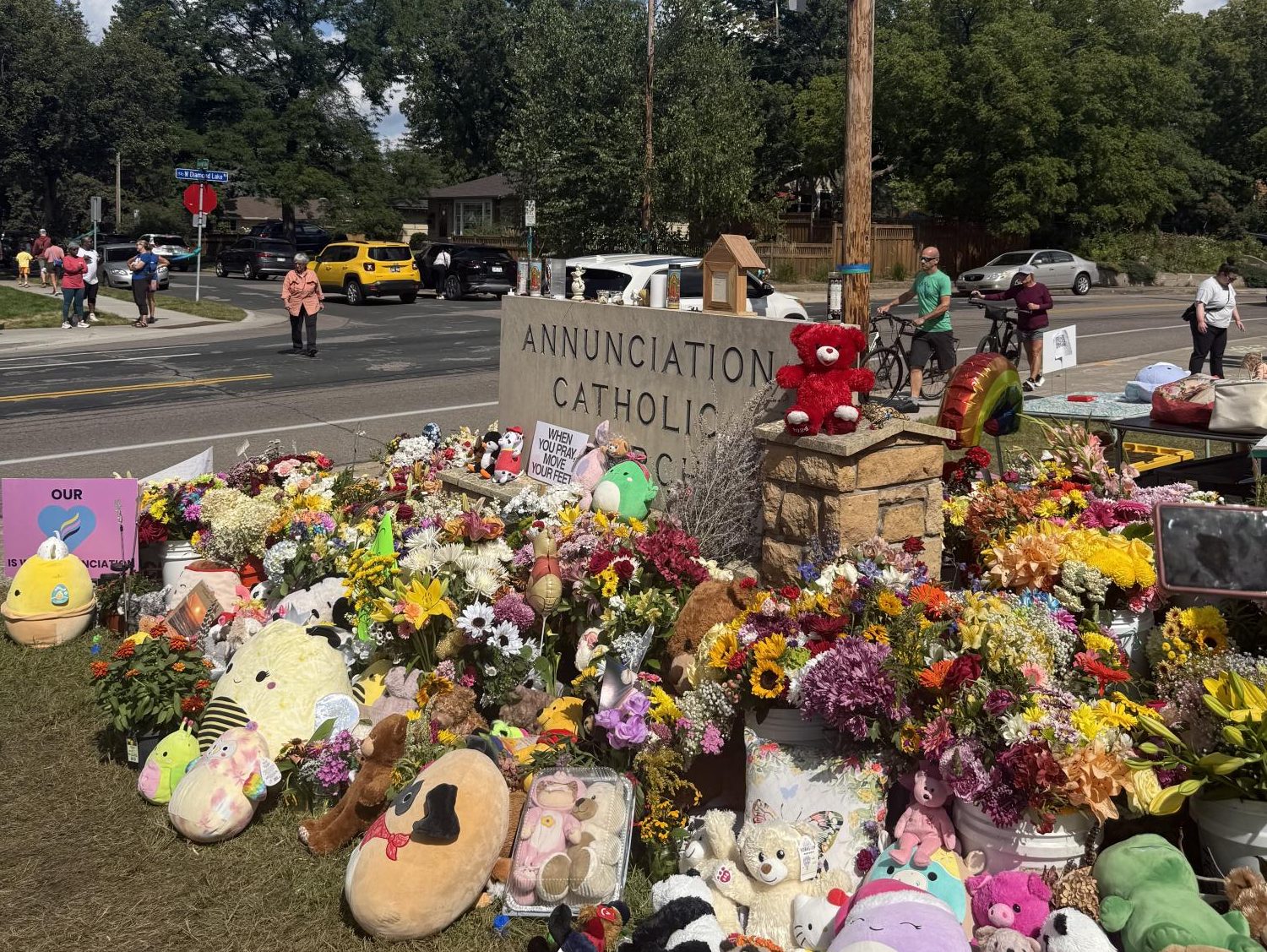
“I saw one girl in particular who had blood coming down her arm. She was six or seven or eight years old. That was when I realized something’s not good,” Jeremy Bardwell said, who witnessed the horrors that took place on Aug. 27, the day of the mass shooting at Annunciation Catholic School in Minneapolis.
During Wednesday mass in the school’s chapel, former Annunciation attendee Robin Westman forced her way into the building from an outside window, wounding 18 attendees, which included three 80-year-old parishioners, and killing two children.
As the first school shooting of the 2025–26 school year, the news spread quickly and dominated the front pages of major media outlets. For EHS students and local governments, it quickly became a focus of conversation.
The gunshots especially echoed around Edina, one of the closest suburbs to the school. The news of the incident was released in the middle of the school day, leaving students to find out about the potential harm to friends and family during class.
“I found out about the shooting at lunch during school, and I texted [my neighbor] right away,” sophomore Whitney Van Sloun said of her seventh-grade friend, who was present at Annunciation at the time of the shooting and sustained an injury to the head. “All I knew from the news was that an eight-year-old and ten-year-old were killed, and her younger brother was eight. I was like, ‘Are you okay? Please tell me you’re okay.’ But her location hadn’t moved.”
Despite her best attempts, Van Sloun wasn’t able to leave school and find out.
“I tried to just forget about it because I had practice after school,” Van Sloun said. “But when my mom got in the car, I could tell right away that something was wrong [with her], and we both just started crying.”
For some, the reality of the situation took longer to settle.
“I was in the third hour, and my para-professional in the room, she pulled me to the side. She was trying to explain quickly and quietly what was happening. I remember thinking, ‘Oh no, another shooting, that’s bad.’ And I literally carried on. It wasn’t really until I got home and got more information that it started to feel more personal, which is almost more embarrassing to admit,” social studies teacher and Students Demand Action (SDA) Club Advisor Joy Dunna said.
The rest of the week wasn’t any less challenging for individuals impacted by the shooting. For many, the thoughts of Annunciation were inescapable; articles and news notifications sent out by major media outlets and news aggregates like the New York Times, Washington Post, and Apple News made it difficult to forget about the incident.
“[The next day] was really hard because everyone was kind of talking about it, but nobody really knew a ton,” Van Sloun said. “I was living in a state of constant worry because I didn’t know what was happening with [my neighbor].”
While the EHS community was left in disarray, they weren’t without mobilization. Van Sloun was inspired by the Benilde St. Margaret Girls’ Volleyball team, who wore blue and green ribbons in their hair at their first game against Edina in support of the victims. She then created ribbons of her own, sharing them with close friends and the Edina Girls’ Volleyball team.
“My whole goal with it was to show support to the community and spread awareness about stopping gun violence, and to show support to my neighbors,” Van Sloun said.
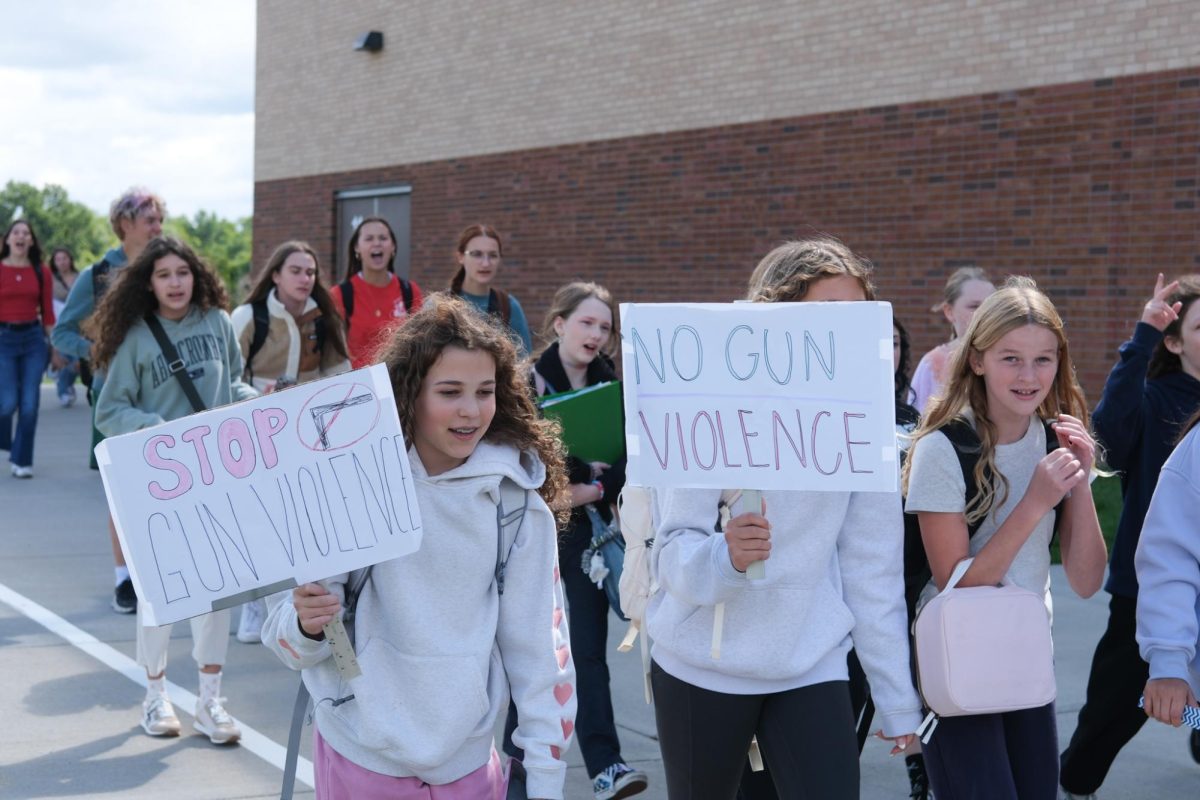
That wasn’t the only way students at Edina showed solidarity with Annunciation. On Sept. 5, the National Chapter of Students Demand Action organized a walkout. Students at EHS gathered at Door 5 at noon and left school with signs protesting a lack of gun regulation in the U.S., with students from Valley View Middle School joining later.
“I was pleased to see that lots of people were invested [in gun regulation], but there was that numb feeling of ‘I feel it’s hard to celebrate what should just be common sense.’ Why do we have to keep putting people, and our young people, in danger, when there are things we could potentially be doing to maybe not eliminate the risk fully, but minimize the risk?” Dunna said.
For those involved in the Catholic community, fear has grown.
“We’ve done a security check on everything [and] changed a number of things. And, more importantly, [found hope] in prayer and by listening. People need to be able to tell their story. We have been here and we have listened,” St. Patrick’s Catholic Church pastor Allen Kuss said.
“I just didn’t understand why people would have such easy access to [guns]. It made me scared that anyone can have one,” Van Sloun said.
She’s not alone. Walkouts, advocacy organizations like Students Demand Action, and student-led firearm reform bills are channels by which Edina youth seek changes in gun regulation.
“Hurry up. What more needs to happen? It’s upsetting that it’s a fear that young people have, especially in a place they shouldn’t have to be afraid to be at,” Dunna said, who focuses on school efforts to pass gun regulations with SDA.
The cries of the student body and concerns of educators have persisted as government officials have yet to pass gun regulation that significantly decreases the chances of school shootings. According to a Pew Research Center study, in 2000, there was an average of three active shooter incidents a year; in 2023, there were 48. Despite this, the issue is still politically polarizing.
“I think we have a Second Amendment, and I think it’s pretty clear [it] ‘shall not be infringed,’” Minnesota House of Representatives Candidate and Republican Dale Johnson said.
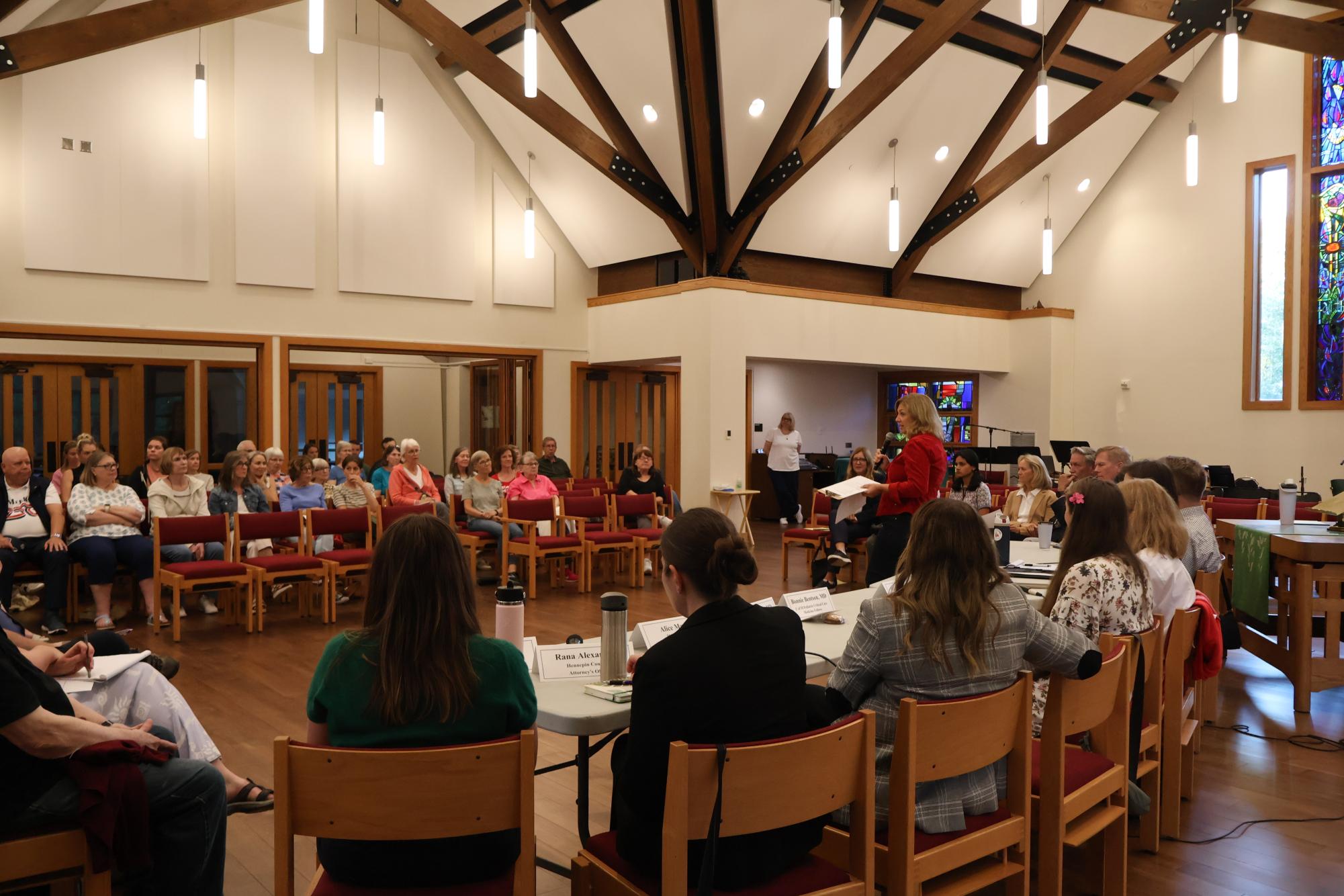
His views were shared at a community forum on gun violence taking place on Sept. 23. Community leaders like Edina Mayor James Hovland and Minnesota House Rep. Julie Greene answered questions on gun violence and heard the opinions of Twin Cities citizens on gun reform. This comes shortly after Minneapolis Mayor Jacob Frey and U.S. House Rep. Ilhan Omar promised meaningful gun reform, only further stoking radical political tension in Minnesota.
Johnson attempted to weaken Omar’s efforts by attacking her legitimacy, saying things like “I think Ilhan Omar doesn’t belong in America. She doesn’t like America,” and “She came in here illegally.”
Beyond the extremist language circulating as a result of proposed gun reform, the promises made by local and state government officials may not align with their actual abilities. Local governments can only adopt gun regulations passed by the state and control areas of prohibited firing, zone firearm dealerships, and a few other minor regulations, meaning that Frey’s promises of a safer community are limited. Those who are afraid of the current state of weapon availability, such as Van Sloun, have yet to see their concerns met.
State and federal regulations made progress in recent years with legislation like the Bipartisan Safer Communities Act from 2022, which created red flag laws and enhanced background checks for potential buyers. Yet, despite all of this, major shootings still happen. The weapons used during Annunciation were acquired legally, and citizens are left to wonder about their safety.
“I don’t like to think that I’m brave for being a teacher,” Dunna said. “It’s taking too long [to create gun reform].”
Content warning: This section mentions transphobia.
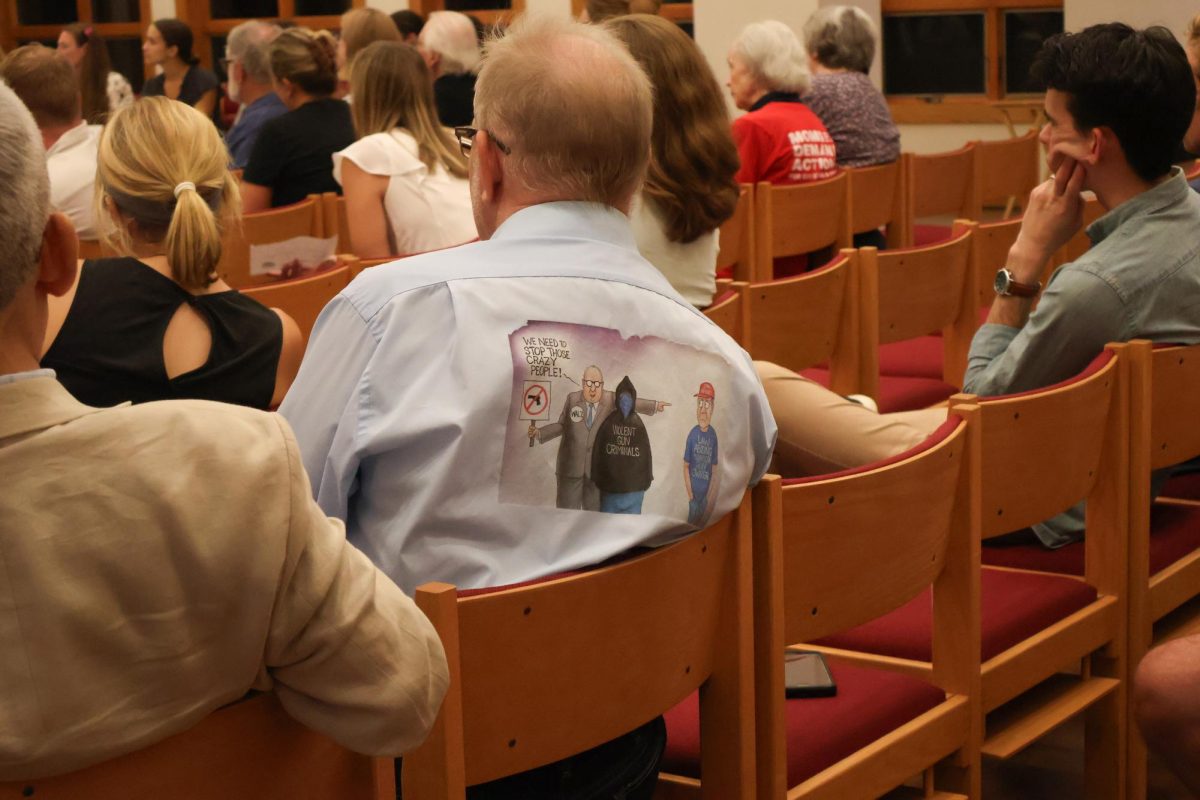
The polarization surrounding gun reform isn’t the only culture war that has been fueled by Annunciation. The shooter, Robin Westman, was a trans woman who legally changed her name in 2020. The judge assigned to review the petition wrote that Westman identifies as a woman and wanted her name to reflect that decision. This fact is exactly where anti-trans advocates are putting the blame.
“Get the guns out of the hands of the convicted criminals and lock up the convicted criminals. And if people think that they’re a human but tomorrow they can be a giraffe, don’t let them have a gun,” Johnson said, who is publicly anti-trans.
Coverage from major Republican news outlets angles the story the same way. The culture war stemming from the coverage of Annunciation is not what citizens were looking for.
“I don’t think it’s controversial to say that it’s pretty gross and disgusting to think that you can equate those two things. Someone can just exist and do a bad thing, and it doesn’t have to do with how they see themselves and how they want to be seen,” Dunna said.
The theme of personal identity and culture being blamed for shootings isn’t new. In fact, marginalized communities are often targeted in media coverage of active shooter incidents. A study from the National Council on Family Relations found that marginalized communities see blame and hatred in coverage from media after a shooting more often than their white counterparts. Black and Muslim shooters were more likely to be tied to the word terrorist, and race and gender identity were often mentioned sooner in media coverage.
“A story is not just black and white. And you can’t just pick a red herring or some kind of distractor to blame all violence on,” Dunna said. “The students I get to work and interact with understand that someone’s identity is not what ultimately leads to a school shooting.”
In response to the political and social tensions coming from annunciation, Kuss has adopted a new way of ending his weekly sermons.
“I remind people to be kind to each other, to reach out to each other, and to listen to each other,” he said. “If we stop listening, we are all alone. We all want to be heard. We all want to be loved.”
This piece was originally published in Zephyrus’ print edition on Oct. 2, 2025