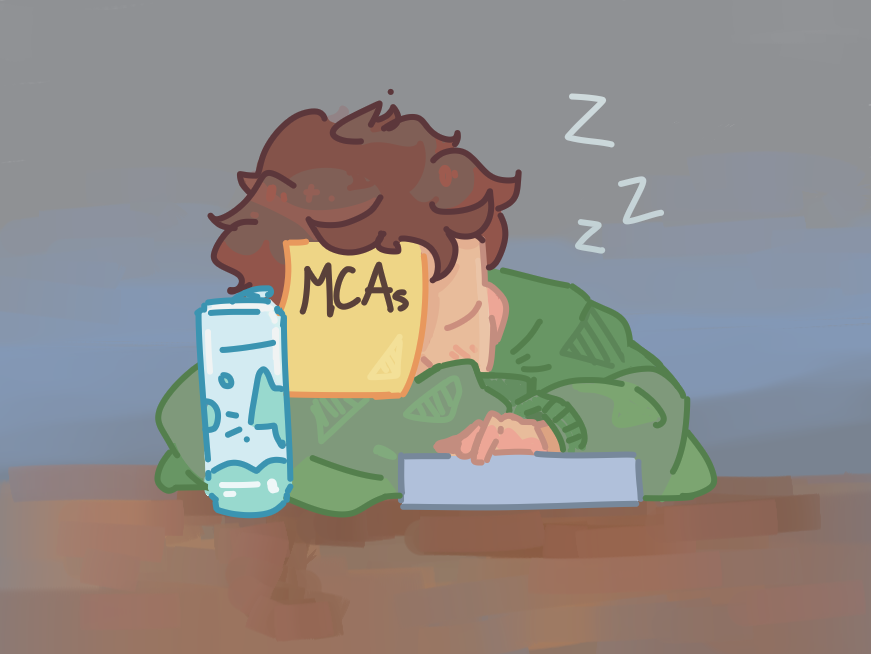
Tick-tock. Two hours in, and my page is blank. It’s the night before the Edina Model United Nations conference and I need to write the opening statements I procrastinated. They usually discuss the power of youth advocacy, but tonight, I don’t feel like writing those clichés. How can I champion the power of youth when nothing is in my control nowadays?
In the end, I manage to produce a speech about the value of practicing compassion. But I’m still stuck with that feeling of futility.
Tick-tock, teases my alarm clock. No more time for youthful optimism.
I’ve grown up hearing that kids like me are the world’s future, precocious wayfinders equipped to reverse the mistakes of our predecessors. But we have a serious problem with disillusionment. Don’t mistake my apathy for laziness; teens experience learned helplessness when society’s idealistic expectations clash with an increasingly grim reality.
People my age have more resources than any generation that came before us, yet we are apathetic to what goes on in the world because we no longer think that we can control it. We live under the constant threat of our worst moments becoming publicized and torn apart online; an impossible college admissions system arbitrarily determines how we will spend our early adulthood; even student-led protests bring little change to the policies surrounding our education. When this is the environment you live in, it’s natural to feel like your actions are futile.

Learned helplessness, a psychological term which describes how repeated uncontrollable events cause victims to become apathetic, is generally utilized in a parenting context. But it relates to our development on a greater level, too: our world conditions us to give up.
Though the root of this problem is hard to pin down on just one thing, it may come down to news apathy. According to Dunbar’s number, we can cognitively handle connecting meaningfully with at most 150 people and acquaint ourselves with 500. So, when our phones routinely throw thousands of negative stories in our faces, we become too overwhelmed to process them all and mentally disconnect instead.
This sense of futility is compounded when we are flooded with idealistic rhetoric about our potential. I don’t doubt that these sentiments are grounded in some kind of truth, but learned helplessness primes teens to see that reality as out-of-touch and unattainable. What is supposed to invigorate and inspire us seems insincere when everything is slipping out of our control.
It is really, really hard to have faith in the future when you can’t handle the present. Being constantly told that you are the future feels impossible when you lack control over what is happening right now.
This is the part where I tell you what I think should be done to address this, but I don’t have an easy fix. I could get metacognitive and suggest that my lack of ideas is a product of the learned helplessness conditioned into me. What I do think we should do, however, is give kids a break without shying away from reality.

We should be candid when talking about the state of the world nowadays. Expressing empathy and reiterating shared experiences is key to addressing feelings of hopelessness in others. Address the fact that many things suck right now, but also remind teens of what they can realistically do to improve the world around them. Taking control of the small things, whether it be quitting an overwhelming activity or donating resources to local families facing temporary hardship, can help us unlearn our helplessness.
Be pragmatic, not be pessimistic. The power of youth starts with the power in you.
This piece was originally published in Zephyrus’ print edition on Feb. 19, 2026