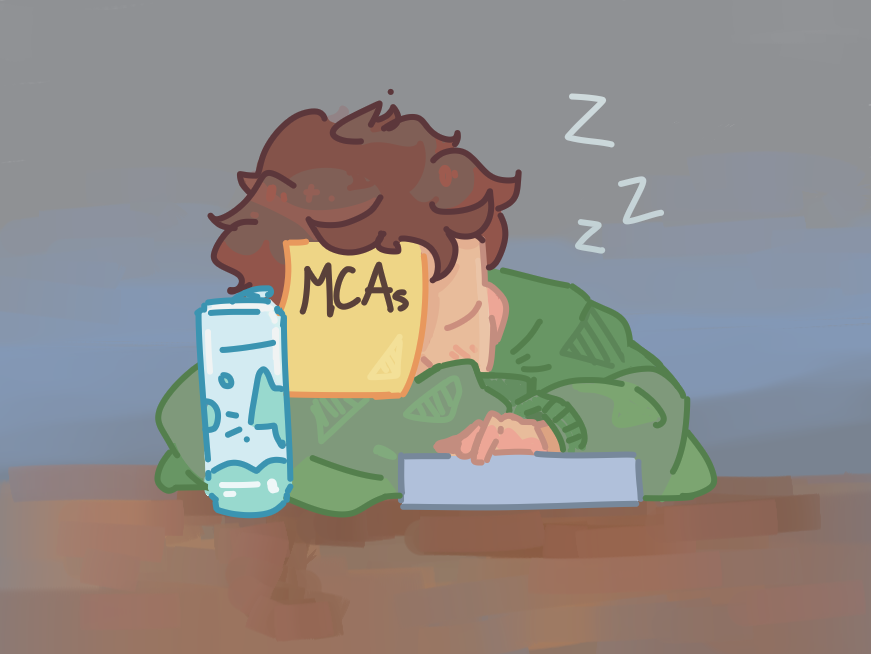

Why do so many students fall asleep during class? The answer is simple: a lack of sunlight. Limited access to windows and natural light in Edina High School classrooms may be contributing to rising levels of daytime fatigue.
Students already struggle with sleep; during adolescence, the body’s internal clock shifts later, making it harder to fall asleep early even when a student needs to wake for practice at the crack of dawn. When combined with extensive afterschool schedules, early-morning sports, and heavy homework loads, many high schoolers already find it challenging to stay alert in class.
Dim or fluorescently-lighted classrooms just make this problem worse. AP World and AP Psychology teacher Madelynne Steenwyk says natural light is critical for maintaining ideal levels of student fatigue or energy. “Natural light regulates your circadian rhythm, so if you don’t have access to it, it can throw off how awake or sleepy you feel in the day,” she said. “If you spend all your time in dark and dim classrooms, that could disrupt your sleep and wakefulness cycles.”
The blue wavelengths in morning sunlight provoke hormones such as serotonin that help the body wake up. Meanwhile, the softer, waning evening light triggers the release of melatonin, preparing the body for sleep. In this sense, not being exposed to natural light through windows for seven hours daily can mess with already complicated hormone patterns, interrupting the built-in cycle. This disrupts students’ ability to fall asleep and wake up easily, affecting their academic performance and relationships with others.
A study by University College London reports that natural light directly results in better academic performance. While many factors of school design were evaluated, such as temperature and acoustics, daylight had the most influential and positive impact on students. Greater natural light through the installation of skylights, expanded windows, or a wider focus on interior glass could help end the epidemic of exhaustion in class and even improve students’ general wellbeing or academics.
“High schoolers fall asleep a lot,” Steenwyk said. “[Natural light] just makes people happier.”
This piece was originally published in Zephyrus’ print edition on Dec. 18, 2025