
Chelsea Parke Kramer founded Parke in 2022 as a fashion brand inspired by “a desire for timeless, elevated essentials.” Most of the brand’s clothes consist of denim sets with jeans and jackets in several different designs. However, their leisure wear, especially their logo-adorned sweatshirt, is what they are most known for.
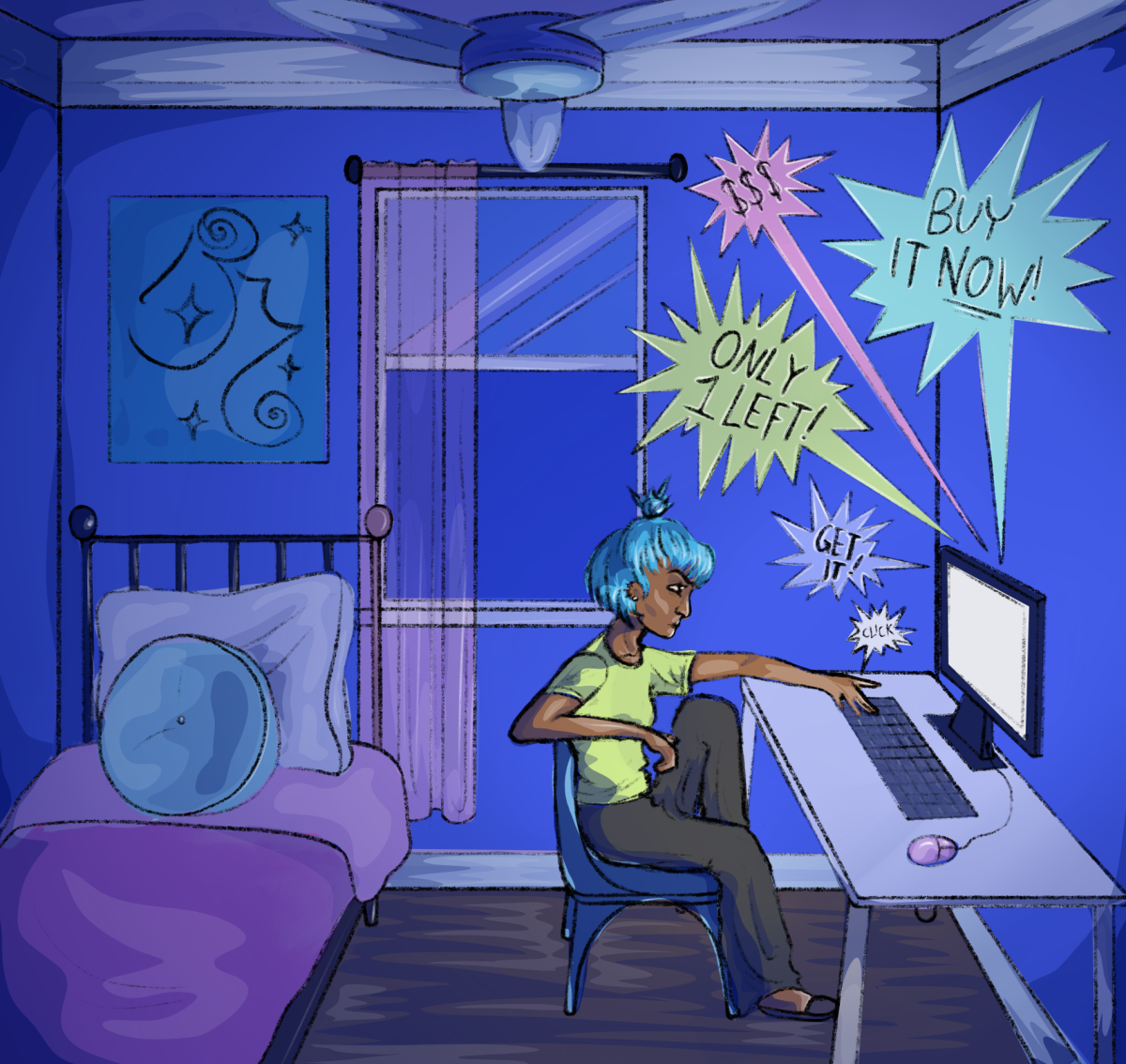
The brand accumulated $16 million in revenue in 2024, all without spending a single dime on advertising, according to Forbes. The brand operates on a scarcity model, which means they sell a limited number of sweatshirts through collection drops, typically selling out in five to 10 minutes.
Parke’s rise to fame has resulted almost entirely through social media. Their reach has even extended to Edina High School, where many students sport the sweatshirt. One such student is sophomore Emma Griffing, whose first contact with the brand occurred on social media.
“I saw [the sweatshirts] were really popular on social media and thought they were cute, so I decided to get one. A lot of people in high school and college, as well as influencers, were posting about the sweatshirts,” Griffing said.
Influencers who frequently wear Parke sweatshirts like Darcy McQueeny and Kaiden Kilpatrick, two University of Alabama students, boast around two million and 240,000 followers respectively across the United States and abroad. Parke has snowballed their success by recruiting influencers who sport the garments, all without paying for regular advertisements.
Economics teacher Michael Franssen says that companies “want to meet consumers where their eyeballs are.” So if influencers can act as that connection between consumers and a company, it would make sense to use social media instead of paying for conventional advertisement.
Parke’s manufactured scarcity has also allowed them to charge at a much higher price point than their competitors because of their reputation as an exclusive brand. Usually, prices for goods are the point where the demand curve and the supply curve meet. When companies create a scarcity of their product, their demand increases because consumer expectations are heightened.
“With limited drops, you’re creating this expectation among consumers that they need to buy it now because it’s not going to be available in the future. If you’re Parke and you can make a sweatshirt for materials and labor about the same price as Champion, but you can make way more money per sweatshirt because people are willing to pay more, you can get away with making a lot less sweatshirts but making just as much money as Champion, who’s getting less profit per sweatshirt,” Franssen said.
Psychology teacher Eric Payne explained how a limited supply of something can drive people to act irrationally.
“A driving force is they will miss out on it. ‘My friends, my family, and my peers will have it, but I won’t. Therefore, I won’t be able to get it again.’ That’s part of what drives the irrational behavior, why people are willing to pay a really large price for it, even when maybe they can’t afford to,” Payne said.
Parke’s success as a relatively new company only seems to be growing from here as the number of Parke sweatshirts seen in EHS increases. Although Parke seems to be unstoppable now, the question of its business model’s longevity remains.
This piece was originally published in Zephyrus’ print edition on April 9, 2026