
In early spring, hornets emerge from hibernation, unfurling their wings and taking flight for the first time in months. At Edina, this includes more than just insects: sticky fingers and cheeky grins have begun to grace the high school, where Child Psychology students run Hornets Nest Preschool twice a week.
Hornets Nest, which has existed for over 40 years, lets Child Psychology students interact with course content hands-on. The students choose, plan, and facilitate activities based on what they learned about child development for around 15 preschoolers, who visit during the two class periods that Child Psychology 1 and 2 are taught.
“We focus on physical, intellectual, social, and emotional development, which is often referred to as PIES,” Child Psychology teacher Sarah Irons said. “So we can have good expectations for what they should be able to do, and then we learn about child guidance… and how we can help them increase their development in all those four areas of PIES while they’re with us.”
Hornets Nest runs from October to December and March to May, during the back half of each semester.
In a typical Hornets Nest session, preschoolers begin in free play, then engage in crafting, storytime, and a game in the gymnastics gym. During each class period, half the student leaders act as “teachers” and guide the activities, while the other half quietly observe the behavior of the preschoolers. The observers note the preschoolers’ motor skill development, relationship-building skills, and play patterns, and reflect on how they demonstrate course concepts.
“You notice a lot more. The way a kid plays with toys, you understand why they’re doing it that way, what they’re getting from it, which is really interesting,” senior Claire Johnson said.
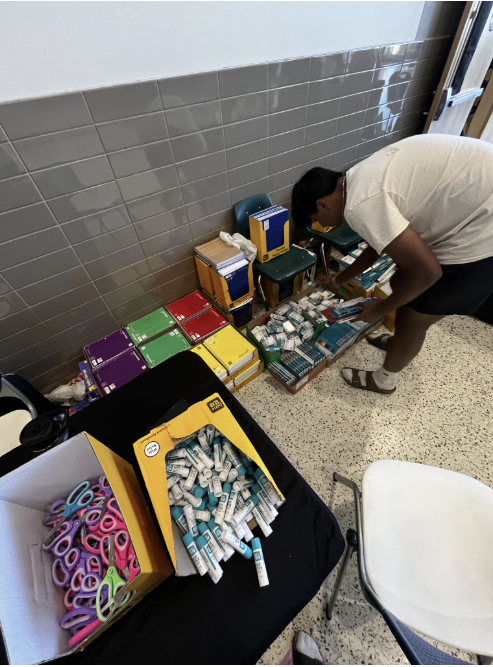
Irons, who has overseen Hornets Nest for 11 years, gathers class materials and helps her students both create and execute their activity plans. She also chooses a weekly theme, like “bugs” or “space,” that the crafts and snacks should be related to. The snacks and other class materials, such as paint markers and cardstock, are funded through the EHS Family and Consumer Sciences budget or are provided by donating families.
Irons said that she finds preschoolers who can come through “word-of-mouth” or by posting on the Edina Moms Facebook group. The preschoolers span ages two to five, with many returning every year.
“One thing that surprised me was just how talkative they were,” sophomore Heidi Guth said. “I was expecting them to be really, really shy, because when I was younger, I was really scared of high schoolers. But, when I came in the first day, for instance, they were all very social… It’s really cool to see how excited they are to meet the older kids.”
“I definitely built a bit of a bond with some of the kids; they were just super sweet,” sophomore Audrey DeLaney said of her experience taking Child Psychology 1 last year. “I miss them. It was really fun.”
This piece was originally published in Zephyrus’ print edition on April 9, 2026