
Teen influencers: if you’re on any social media platform, you know they’re everywhere. Embreigh, Preslee, and PaisLee are only a few of the teenage TikTokers flooding the world’s FYP. The ground these girls walk on is kissed, even though they are the most mediocre and unoriginal people on the internet. Teenagers, especially girls, having such a large following and influence is dangerous, for their followers and for themselves, because they can be easily victimized, and they push negative beauty standards.
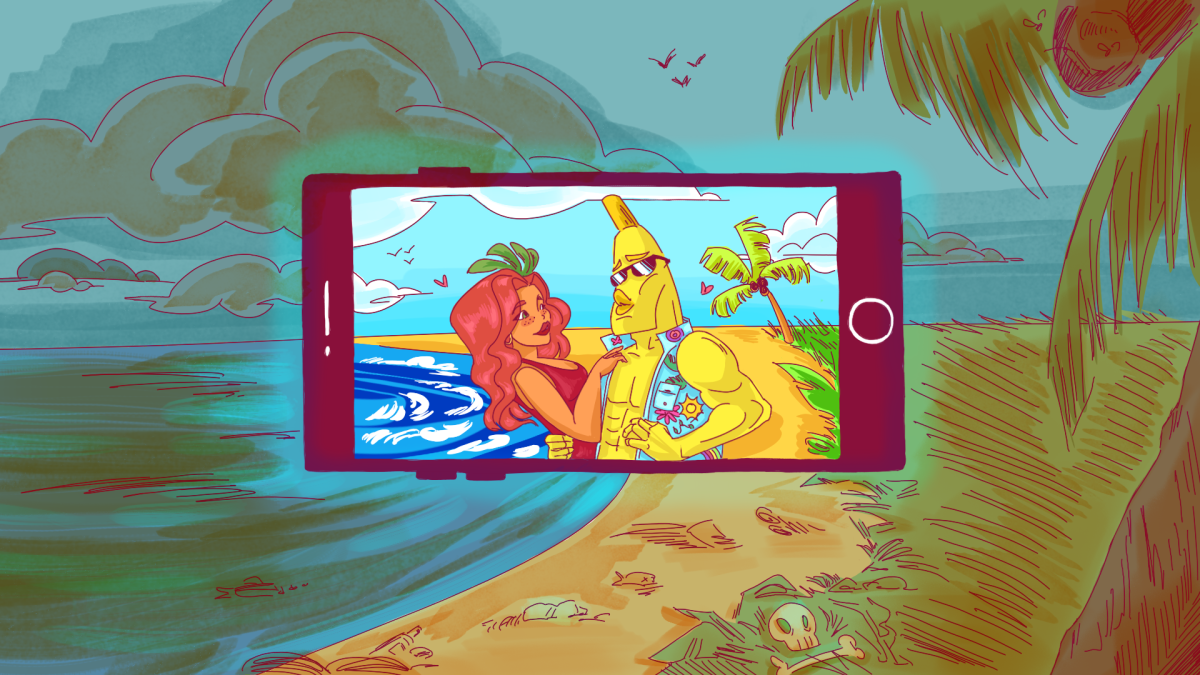
First of all, brand trips are key opportunities for teen TikTokers to gain more popularity because they unite two audiences under the same content. In early June, members of the Glow House, an influencer house of young women, flew to the Bahamas for a collaboration with the clothing brand Pink Palm Puff and ended up modeling bikinis.
This campaign was irresponsible, and the fact that the guardians of the Glow House members signed off on it is concerning. The promotions for Pink Palm Puff’s line were plastered all over the internet; girls as young as 15 were modeling the new skin-baring line. The internet can be an incredibly unsafe place for young women, and the idea that a conventionally attractive, teenage girl in a bikini will not be sexualized or preyed upon is delusional.
The perpetuation of harmful beauty standards is also evident through the popularity of Embreigh Courtlyn, a beloved teen influencer with over 4M followers. Someone with so much fame and influence must be unique, right? Wrong. With a whopping 56.7M views, Embreigh’s lip-syncing video to the song “Lady Killers II” by G-Eazy is her most viral video. In this TikTok, she stares emotionlessly at the camera, mouthing the words. Now, what differentiates this video from any other lip-syncing video on the internet? It’s simple; people like the way she looks. This seven-second lip-sync having such an enormous effect on social media just goes to show how prominent and rewarded pretty privilege is today.
This pretty privilege infects teen influencers’ audiences with jealousy. In addition to the undeserved praise, teen influencers who are popular for their beauty, such as Embreigh, often receive comments flooded with envy and insecurities. They frequently get labeled as a “lacy,” referring to the song by Olivia Rodrigo. The term “lacy” has been adopted to describe someone who a person is so jealous of that it turns to hatred.
The Glow House was created in a superficial attempt to limit these jealousies and insecurities on TikTok, but it’s done the opposite. While it claims to be a positive and uplifting “big sis” community, its performative diversity proves this false. The Glow House started with your stereotypical skinny, mostly blonde bombshells, but when the house received backfire for their lack of inclusivity, they made a surface-level attempt to tack on token minorities. Users noticed that in group videos, they put their “diversity” in the front, which looks incredibly insincere and exploitative.
The Glow House and other teen TikTokers have the opportunity to make social media a safer place for generations to come, but for this to happen, they must be mindful of what they post and who it affects. The younger generations are watching their every move, and although that is terrifying, it is powerful. They get to play a role in shaping the next generation’s self-perception. They can make waves by being genuinely inclusive, positive, and an uplifting example that younger kids can safely look up to.